
How Privacy Film Deters Theft in Cars
- jai ramah
- May 21
- 6 min read

A bag on the back seat. A laptop cable peeking out from the footwell. A coat covering something worth taking. Most vehicle theft from parked cars is not sophisticated - it is quick, opportunistic, and based on what can be seen in seconds. That is exactly how privacy film deters theft: it limits what strangers can assess at a glance and makes your car a less obvious target.
For many drivers, that matters just as much as the smarter look and cooler cabin. Privacy film is often chosen for style and comfort first, but the security benefit is one of the most practical reasons to have it installed properly.
How privacy film deters theft at street level
A thief usually makes a fast decision. They scan parked vehicles, check sightlines through the glass, and look for easy rewards. If they can clearly see a handbag, tools, shopping, or tech, the risk may feel worth taking. If they cannot see enough to judge what is inside, the decision becomes less attractive.
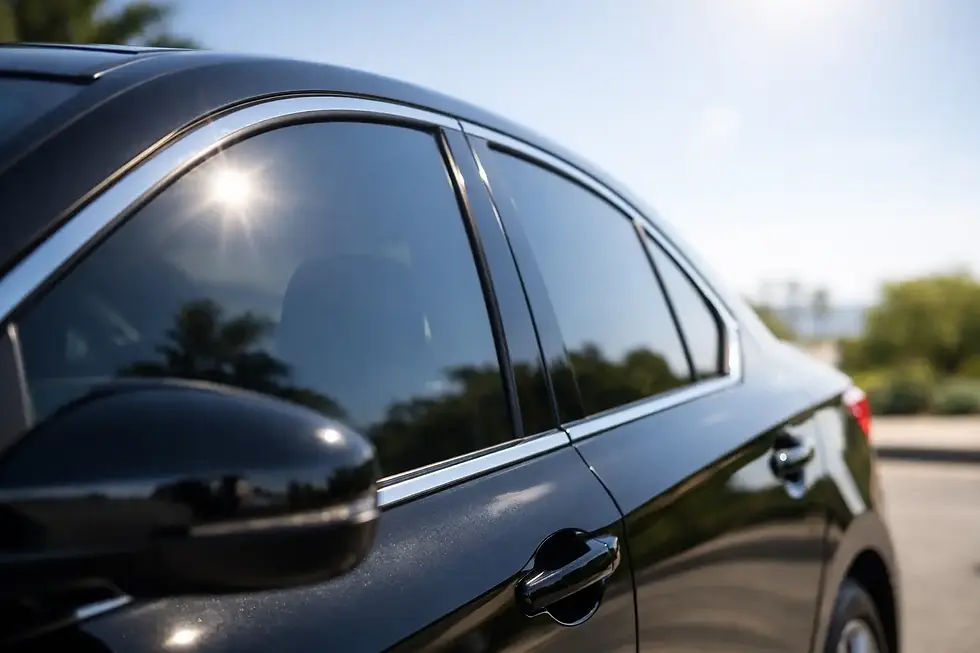
That uncertainty is valuable. Privacy film does not make your windows completely opaque, and it is not a substitute for common-sense security, but it does reduce visual access into the cabin. From outside the vehicle, especially in daylight, it becomes harder to spot valuables on seats, in footwells, or in the rear load area.
In practical terms, that means fewer obvious temptations. A car that reveals very little asks more of anyone looking for a quick opportunity. Most are not interested in effort, guesswork, or extra attention.
Opportunists prefer certainty
Theft from vehicles often relies on speed. Someone walking past a row of parked cars wants a clear yes or no. Is there something worth taking? Can I grab it quickly? Will anyone notice?
Privacy film interferes with that process. Instead of offering a clean view through the rear doors and back screen, it creates hesitation. If a criminal cannot confirm what is there, the appeal drops. They may simply move on to a vehicle that gives them a better look.
That is one of the biggest reasons privacy film has real-world value. It changes the visual calculation before damage happens.
It is not bulletproof security - but it is a strong deterrent
There is an important distinction here. Privacy film is a deterrent, not an absolute barrier. If someone is determined to break into a particular vehicle, film alone will not stop them. Keys left inside, a high-value item visible in the front, or repeated targeting in a vulnerable area can still result in theft.
What privacy film does exceptionally well is reduce the chance of your car being chosen in the first place. That is often where the best everyday protection sits. The goal is not to make your vehicle invincible. The goal is to make it less convenient, less readable, and less rewarding to target.
For busy professionals, families, and company car users, that subtle advantage matters. You may not always be able to empty the car completely between appointments, school runs, or long days on the road. Privacy film adds a layer of discretion when life is moving quickly.
Why rear windows matter most
The rear sides and back window are often where privacy film has the greatest effect. That is where shopping bags, child seats, work equipment, luggage, and everyday clutter tend to sit. Estate cars, hatchbacks, and SUVs can reveal a lot through the rear glass, particularly when the boot area is open to view.
Once those sightlines are reduced, your vehicle exposes less to passers-by. Even if there is nothing valuable inside, the car appears more controlled and less open for inspection. That alone can make it feel less approachable from a thief's point of view.
The psychology behind a more secure-looking car
Security is partly physical and partly psychological. A vehicle that looks well maintained, upgraded, and deliberately protected often sends a message that the owner is attentive. Privacy film contributes to that impression.
A car with professionally installed tint tends to look sharper and more considered. It does not suggest carelessness. It suggests the owner pays attention to their vehicle, and that perception can influence behaviour. Criminals often look for signs of ease - untidy interiors, visible belongings, and cars that appear neglected or casually used.
Privacy film helps create the opposite impression. It gives the vehicle a cleaner, more private finish and reduces the feeling that everything inside is on display.
This is especially relevant in public car parks, outside workplaces, at train stations, and on residential streets where vehicles sit for hours at a time. In those settings, small visual cues can affect which car gets a second look.
How privacy film works alongside other security habits
The strongest vehicle security always comes from layers. Privacy film works best when paired with sensible daily habits.
If expensive items are left on show in the front seats, no tint on the rear windows will solve that. If doors are unlocked or windows left open, the deterrent value is reduced. Likewise, if your car is parked in an isolated area overnight, lighting and location still matter.
But when used properly, privacy film supports the basics very well. It helps conceal what cannot always be removed immediately. It reduces visibility into the cabin when you are parked at home, at work, or out shopping. It also adds peace of mind when children, equipment, or personal items are in the back.
That balance is what makes it such a worthwhile upgrade. It complements your routine rather than demanding one.
Does darker always mean safer?
Not necessarily. This is where quality and legality matter.
Many drivers assume the darker the film, the better the security benefit. In reality, there is a point where the right shade matters more than simply choosing the darkest option. Privacy needs to be balanced with safe visibility and UK tint laws, particularly on front side windows and the windscreen where legal limits are strict.
Rear windows usually offer more flexibility, which is why many owners focus the privacy and theft-deterrent benefit there. A professionally chosen film can provide strong visual concealment from the outside while still giving the vehicle an elegant, factory-quality finish.
Poorly fitted or excessively dark film can create the wrong kind of attention. It may also bubble, peel, or look cheap over time, which undermines the premium appearance many customers want. Proper installation makes all the difference, both for performance and for the overall look of the car.
Why premium installation matters for security benefits
If film is patchy, purpled, or badly cut, it does not just look disappointing. It can also reduce the practical benefit. Gaps around edges, uneven coverage, or low-grade materials may leave more visibility than expected and give the whole car a less refined appearance.
A premium film fitted by experienced hands delivers a cleaner result. The finish looks intentional, the coverage is consistent, and the vehicle gains the polished privacy people actually want. For customers who value convenience as much as quality, having that done professionally on-site makes the upgrade even easier to justify.
That is part of the appeal for drivers who want more from tint than aesthetics alone. With the right product and installation, you get style, comfort, UV protection, and a meaningful reduction in visual exposure all at once.
Who benefits most from privacy film?
Any driver can benefit, but some vehicles and lifestyles gain more than others. Family cars often carry pushchairs, school bags, tablets, and all the small items that build up in the rear. Company car users may leave paperwork, samples, or equipment in the vehicle between stops. Drivers with premium interiors may simply prefer not to advertise what is inside.
SUVs, estates, and hatchbacks also have more glass exposing the rear area, so privacy film can make a noticeable difference. If your boot space is visible through the back window, reducing that line of sight is a smart move.
For people constantly on the go, this is where convenience meets practicality. A car can look better, feel cooler, and reveal less without disrupting your day.
A smarter kind of protection
The value of privacy film is not that it turns your car into a vault. It is that it removes easy visual cues, lowers temptation, and helps your vehicle blend out of the shortlist for opportunistic theft.
That is why the answer to how privacy film deters theft is refreshingly simple. When people cannot quickly see what they might steal, many will not bother trying. And for everyday driving, parking, and ownership, that extra layer of discretion is one of the smartest upgrades you can make.


Comments