
How Mobile Tint Installation Works
- jai ramah
- Jun 2
- 6 min read

If you have ever put off tinting your car because you could not spare half a day sitting in a workshop waiting room, mobile service changes the equation. How mobile tint installation works is actually very straightforward: a professional installer brings the tools, film and expertise to your home or workplace, completes the tint on-site, and leaves you with a sharper-looking, cooler, more private car without the usual disruption.
That convenience is the obvious appeal, but it only matters if the finish is right. A premium mobile tint installation is not a cut-down version of workshop tinting. Done properly, it follows the same careful process, with the same focus on preparation, film quality and precise fitting. The difference is that the service comes to you.
How mobile tint installation works from booking to finish
The process starts with the quote and the right film choice for your car. Not every driver wants the same result. Some are focused on privacy, others want a cleaner, more executive look, and many simply want to reduce cabin heat and protect the interior from UV exposure. The installer will usually ask for your vehicle make and model, the windows you want tinted, and the shade you are considering.
This early stage matters more than people think. A hatchback, saloon, coupe and SUV all present slightly different fitting requirements, and the rear screen can vary significantly depending on its curve and integrated elements such as heated lines or aerials. Getting those details right upfront helps avoid guesswork on the day.
Once the booking is confirmed, you will usually be given basic guidance about where the vehicle should be parked. A level space with enough room to work around the car is ideal. A driveway is perfect, but many workplace locations also work well if access is sensible and the installer can operate safely and cleanly.
What happens on the day
When the installer arrives, the first step is usually an inspection of the vehicle and glass. This is not just a formality. Any existing damage, old film, adhesive residue or contamination on the glass can affect the final finish. If there are issues, a good installer will mention them before work begins rather than after the windows are tinted.
The next part is preparation. This is where quality is won or lost. The inside of the glass needs to be thoroughly cleaned so that dust, lint, grease and fine debris do not end up trapped under the film. Window tint can look simple from a distance, but even a tiny particle can stand out once the film is set.
In a mobile setup, professional preparation is especially important because the working environment changes from job to job. An experienced technician knows how to control that. They choose the best side of the vehicle to work on, manage doors carefully, keep tools and film organised, and reduce contamination risk throughout the installation.
The film cutting and shaping stage
One of the most common questions around how mobile tint installation works is whether the film is cut directly on the car. In many cases, the film is measured and precision-cut to match each window, then heat-shaped where needed, particularly on curved rear screens.
This shaping stage is technical but important. Car glass is rarely perfectly flat, and the film needs to sit naturally against the shape of the window to avoid fingers, lifting or tension points. Heat shrinking allows the film to contour properly before it is installed on the inside of the glass.
With premium film, the difference is noticeable. Better-quality products tend to handle more cleanly, offer better optical clarity and maintain their appearance over time. That matters if you want the car to look refined rather than simply darker.
Applying the tint to the glass
Once the window is cleaned and the film is prepared, the installer applies the tint to the inside surface of the glass using a slip solution. This allows the film to be positioned accurately before it is squeegeed into place. Water and air are then worked out from under the film in a controlled way so it bonds evenly.
This is the stage where experience really shows. Good installation is about pressure, alignment, trimming accuracy and consistency across the vehicle. The goal is a finish that looks factory-level from the outside and clean and even from within the cabin.
There is also a practical side to the process that many customers appreciate once they see it in person. Mobile tinting is not messy when it is done professionally. Protective measures are used around door cards and interiors, and the workflow is designed to keep the vehicle tidy throughout.
Why weather and location can affect the job
Mobile tinting is convenient, but it is not careless. Conditions matter. Heavy rain, strong wind, roadside dust or poor lighting can all affect installation quality. That does not mean mobile tinting is unreliable. It means a professional service knows when conditions are suitable and when a job may need to be scheduled carefully or positioned differently on-site.
For example, a sheltered driveway or covered area is ideal, while an exposed roadside space on a gusty day is less than perfect. Temperature also plays a part in how the film handles and how quickly it begins to cure. None of this is a problem when the job is planned properly, but it is one reason reputable installers do not rush for the sake of speed.
That balance matters. Convenience should never come at the expense of finish.
How long mobile tint installation usually takes
Time depends on the car and the number of windows being tinted. Rear windows only will naturally take less time than a full vehicle installation, and larger vehicles with more complex glass shapes can take longer. As a general rule, most customers should expect the installer to spend enough time to do the job properly rather than trying to race through it.
If you are booking tinting at home, that means you can simply carry on with your day while the work is completed outside. If it is being done at your workplace, you avoid the separate journey to a tint shop and the knock-on effect that has on your schedule. For busy professionals and families, that is often the real selling point.
What the windows look like straight after installation
Freshly tinted glass does not always look completely settled the moment the installer packs away. You may notice a slight haziness or small water pockets as the remaining moisture evaporates during curing. This is normal.
The curing period can vary depending on the season and ambient temperature. Warmer conditions generally help the film settle faster, while colder or damp weather can extend the process. During this time, you will normally be advised not to lower the windows for a few days so the film can bond fully at the edges.
Patience pays off here. A properly installed film often looks better and better as it finishes curing.
What makes a mobile tint installation worth it
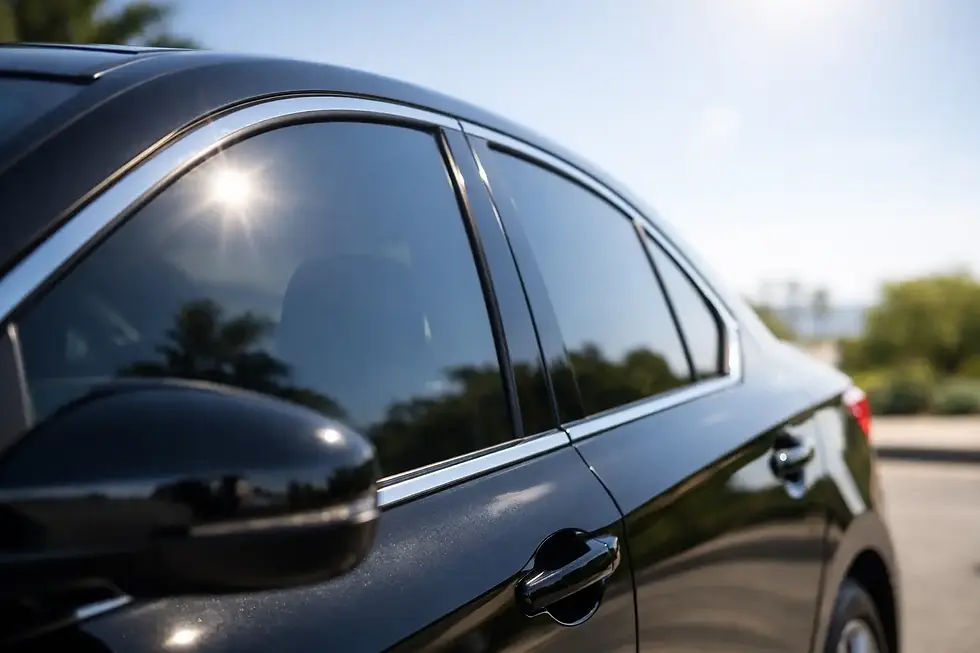
The obvious benefit is convenience, but the bigger value is what you get once the tint is in place. A well-tinted car feels more comfortable in warm weather, gives the cabin a more private feel, helps protect interior trim from fading, and sharpens the overall appearance of the vehicle.
For many drivers, it is one of the few upgrades that improves both style and day-to-day use. You notice it when the car is parked, when the sun is strong, and when personal items are less visible inside. It is a visual upgrade, but it is also a practical one.
That said, quality depends on three things: the film itself, the installer’s skill, and whether the shade chosen suits the car and your expectations. Going too dark for the look you want can feel heavy; going too light may not deliver the privacy you expected. This is where experienced advice helps.
Choosing a service you can trust
If you are comparing options, look beyond price alone. Ask what film is being used, whether the installer is experienced with your type of vehicle, and what warranty is included. Premium materials and proper fitting standards usually cost more than budget work, but they also tend to look better and last longer.
That is particularly relevant with mobile service. You are not just paying for someone to turn up. You are paying for a professional setup, product knowledge, careful preparation and a finish that suits the vehicle. When that is done well, mobile tinting feels less like a compromise and more like the smarter way to get the job done.
For drivers across the West Midlands and North West who want a premium finish without sacrificing time, that is exactly why LuxTint’s approach makes sense. The luxury is not just in the look of the car afterwards. It is in having the whole service brought to your door, with the same attention to detail you would expect from a high-end specialist.
If you have been considering tinting but kept delaying it because life is busy, that is usually the moment it clicks - the best upgrade is often the one that fits around your day as neatly as it fits your car.


Comments