
Factory Glass vs Window Film: What Changes?
- jai ramah
- 2 days ago
- 6 min read

Your car may already have dark-looking rear windows, but that does not always mean it delivers the shade, heat control or privacy you expect. The factory glass vs window film decision comes down to more than appearance: it affects cabin comfort, UV protection, legal compliance and how tailored the finished car feels.
For drivers who want a sharper, more private and more comfortable vehicle, factory-fitted glass can be a useful starting point. Premium window film is often the upgrade that turns that starting point into a genuinely noticeable result.
What is factory privacy glass?
Factory privacy glass is glass that has been darkened during manufacture, rather than clear glass with a film applied afterwards. It is most commonly fitted to the rear passenger windows and rear windscreen of SUVs, estates and higher-specification cars.
Because the darkness is built into the glass, it has an original-equipment appearance and cannot peel, bubble or lift. It is a popular option for family cars, where rear-seat privacy and a more premium look are priorities.
However, factory privacy glass is not necessarily the same as heat-rejecting tint. On many vehicles, it mainly provides a darker visual effect and modest solar control. It may reduce glare and offer some UV filtering, but the level of heat rejection varies significantly by manufacturer and model. A dark rear window can still allow a surprising amount of infrared heat into the cabin.
It is also worth separating privacy glass from standard factory glass. Most cars have clear or lightly tinted glass throughout, even if it appears slightly shaded. That subtle factory tint is not designed to create privacy and rarely changes the cabin experience in a meaningful way.
Factory glass vs window film: the key differences
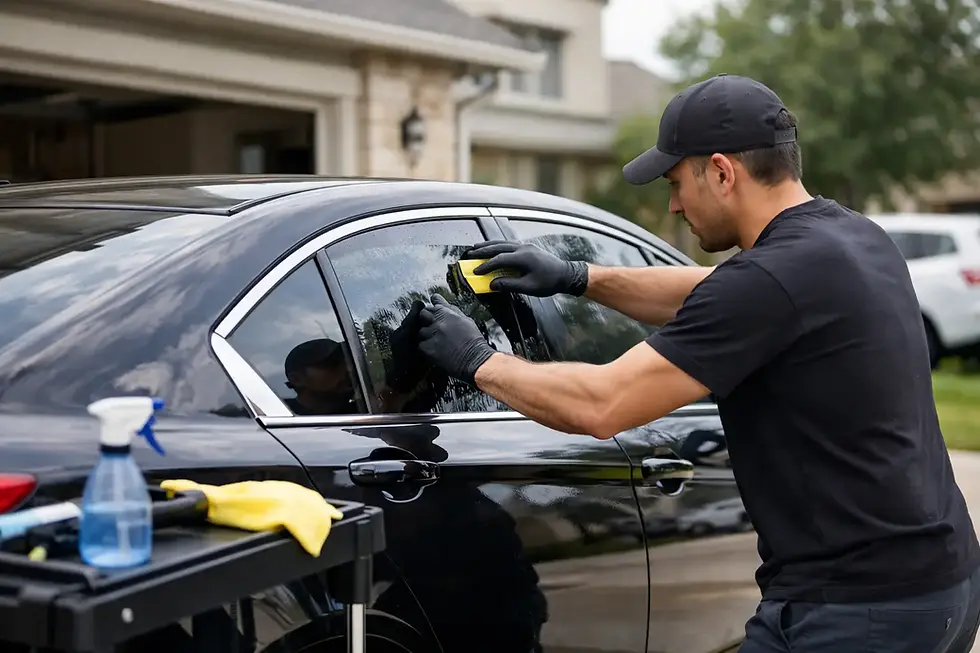
Window film is a precision-cut layer applied to the inside of the glass. It allows you to choose the shade and performance level that suit how you use your car, rather than accepting the specification it left the factory with.
The biggest difference is control. Factory glass comes in one fixed tone, while professionally installed film can be selected for privacy, visual style, glare reduction and solar performance. A quality ceramic film, for example, can reject a greater share of solar heat without needing to be extremely dark.
That makes film particularly valuable for cars with standard clear rear glass. It can give a saloon, hatchback or company car a cleaner, more purposeful finish while making the rear cabin feel less exposed. For parents, it can also help make journeys more comfortable for children in the back during brighter weather.
Film can also enhance cars that already have factory privacy glass. Adding the right film over rear privacy glass can deepen the look and improve heat rejection, although the combined shade must be chosen carefully. The aim should be a refined finish that remains practical, not simply the darkest possible glass.
Appearance and shade choice
Factory privacy glass usually has a consistent, medium-dark look. It suits many vehicles, but it is not a personal choice made around your paintwork, interior or preferred level of privacy.
With film, you can create the finish you actually want. A lighter rear tint can retain an open, executive feel while taking the edge off glare. A darker shade can give greater privacy and a more dramatic transformation. The right choice often depends on the vehicle: a black SUV may suit a darker rear finish, while a premium saloon can look exceptional with a more understated shade.
Professional installation matters here. Poorly fitted film can spoil the look with contamination, uneven edges or visible gaps around the glass. Quality film and careful preparation produce the smooth, factory-style result drivers expect from a premium upgrade.
Heat rejection and comfort
Darkness and heat rejection are related, but they are not the same thing. This is where many drivers are disappointed by factory privacy glass alone.
The sun's warmth is largely carried by infrared energy. Advanced window films are designed to reduce that energy entering the car, helping the cabin feel more comfortable when parked in direct sunlight or during long summer drives. They can also reduce glare without forcing you to choose an excessively dark finish.
For a busy professional arriving at a meeting, or a family setting off on a holiday journey, a cooler cabin is not just a luxury. It can mean less reliance on air conditioning and a more pleasant drive from the first mile. Results will always depend on the vehicle, glass area, weather and film selected, but the difference can be clear in daily use.
UV protection and interior care
Sunlight slowly takes its toll on a car interior. Leather, trim, stitching and dashboard materials can fade or deteriorate over time, especially in vehicles that spend long periods parked outdoors.
Quality automotive window film can block the vast majority of harmful UV rays. Factory glass may provide some protection, particularly where laminated glass is fitted, but the level is not always consistent across every window. Adding premium film to suitable windows creates another layer of protection for the cabin and the people inside it.
This is especially worthwhile if you plan to keep your car for several years, lease a vehicle you want to hand back in excellent condition, or take pride in maintaining a high-quality interior.
Which option is better for your car?
Factory privacy glass is the better choice if you are ordering a new car and simply want an OEM rear-window appearance with no aftermarket work. It is durable, tidy and can add to the appeal of the vehicle from day one.
Window film is usually the better choice if you want flexibility. It can upgrade a car that did not come with privacy glass, improve solar performance on an existing setup, and let you choose a finish that reflects your style. It is also more practical for owners of used cars, where changing the original glass would be unnecessarily expensive.
The best option is often not either-or. Factory privacy glass paired with a premium performance film on the rear windows can provide stronger privacy, enhanced heat rejection and a richer finish. The specification should be assessed before installation so the final shade looks right and works for your needs.
Do not overlook UK tint law
Legal compliance matters as much as appearance. In the UK, the front windscreen must allow at least 75% of light through, and the front side windows must allow at least 70%.
Many modern vehicles leave the factory with front side glass already close to the legal limit. Applying tint film to those windows can make the car illegal, even if the film itself is marketed as light. For this reason, a reputable installer will assess the glass and advise you clearly rather than promising a front-window tint that could cause problems at the roadside or at an MOT.
There are generally no specific light-transmission limits for rear passenger windows or the rear windscreen, provided the vehicle has suitable mirrors. Even so, a sensible shade remains important. Extremely dark rear glass can reduce your visibility when reversing at night or in poor weather, particularly on smaller cars with limited rearward vision.
Why film quality and fitting make the difference
Not all window film performs equally. Lower-cost dyed films may look dark initially but can fade, turn purple or offer limited heat reduction. Premium film is built for better optical clarity, colour stability and long-term performance.
The installation itself is equally important. Automotive glass has curves, seals, dot matrices and delicate trim to work around. A skilled technician takes the time to prepare each window, shape the film correctly and finish the edges cleanly. That is how a tint becomes part of the car rather than looking like an add-on.
At LuxTint, premium Global Film and a lifetime warranty are part of delivering that confidence. The work is completed at your home, workplace or chosen location, so upgrading your car does not need to take a day out of your schedule.
Make the choice around how you drive
If your priority is an original factory look, privacy glass may be enough. If you want stronger comfort, tailored privacy and a more distinctive finish, professional window film gives you far more choice. Before deciding on the darkest shade, think about where you park, who travels in the rear seats and how much night-time visibility you want to retain.
A well-chosen tint should make every journey feel better - cooler on bright days, more private when parked and noticeably more polished every time you walk back to your car.


Comments