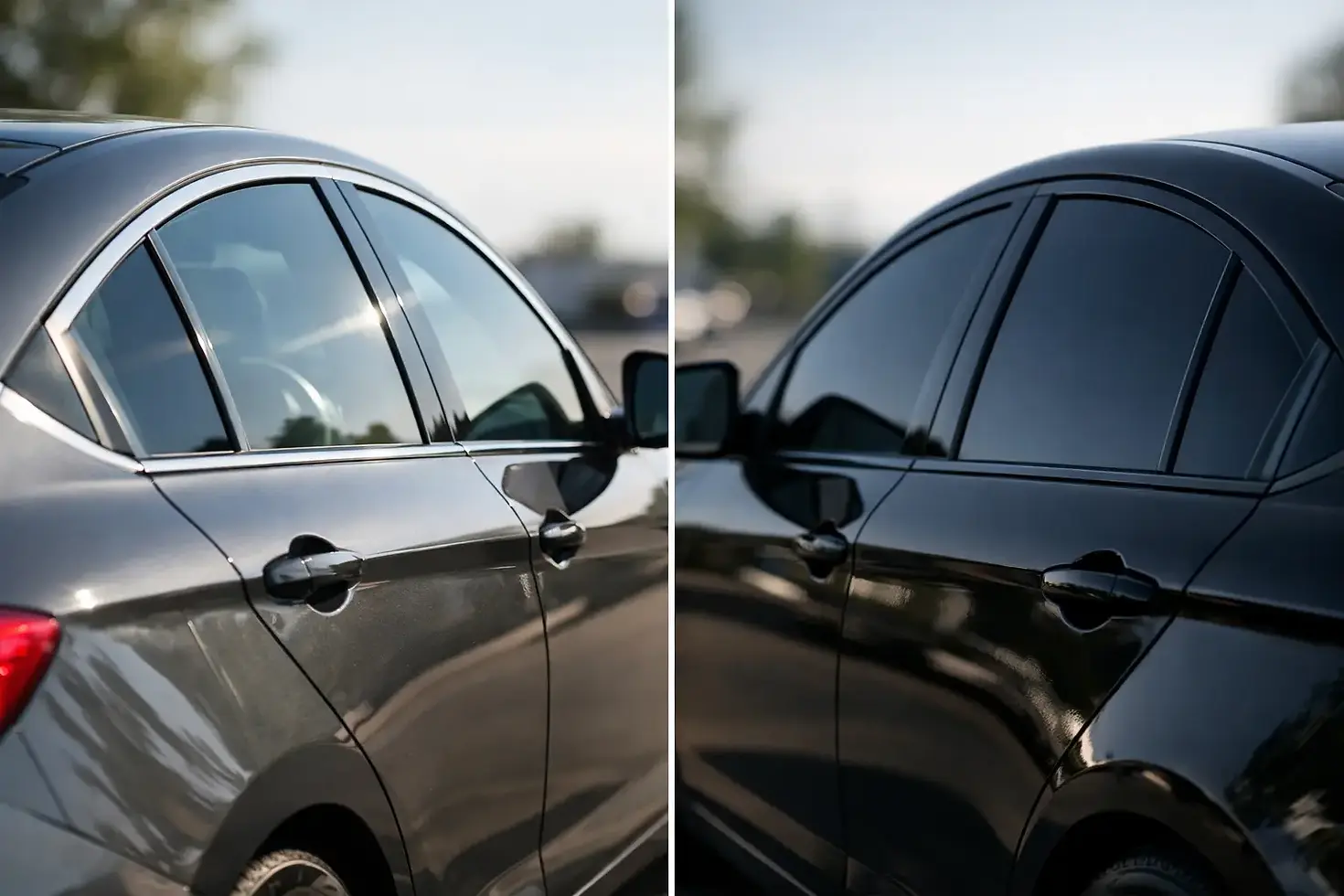
Ceramic Tint vs Dyed Film: Which Wins?
- jai ramah
- May 19
- 6 min read

You usually notice the difference between film types on the first hot afternoon after installation. One car still feels bearable when you open the door. The other has that familiar wall of heat, faded trim starting to show its age, and a finish that looked smart at first but will not always stay that way. That is where the ceramic tint vs dyed film decision really matters.
If you are tinting your car for style alone, dyed film can seem like the easy option. If you want a more complete upgrade - better cabin comfort, stronger UV protection, a more stable finish and long-term value - ceramic tint tends to justify its price. The right choice depends on what you expect from your tint, how long you plan to keep the car, and whether you want a basic cosmetic change or a premium result.
Ceramic tint vs dyed film: the real difference
At a glance, both films can darken your windows and sharpen the look of your vehicle. From the outside, many drivers assume tint is tint. The difference sits in how the film is built and what it is designed to do once it is on the glass.
Dyed film uses a dyed layer to absorb light and create a darker appearance. It is the more traditional and budget-focused option, often chosen by drivers who mainly want privacy and a cleaner look. It can improve comfort to a degree, but its performance is usually more limited when the sun is strong.
Ceramic tint is made with non-metallic ceramic particles engineered to reduce heat and UV more effectively. It is a more advanced product, designed not just to change the look of the glass but to improve the way the car feels day to day. That matters if your vehicle sits outside at work, carries children in the back, or doubles as your office between appointments.
So the comparison is not simply about darkness. It is about performance, lifespan and how premium you want the finished result to feel.
How each film performs on the road
The biggest practical difference is heat rejection. Dyed film can cut glare and help slightly with cabin temperature, but it generally works by absorbing solar energy rather than rejecting it as efficiently. On a mild day that may be enough. In direct summer sun, especially on darker interiors, the limit becomes obvious.
Ceramic film performs on another level. It is designed to reduce infrared heat more effectively, which means the cabin can feel cooler and more comfortable, particularly when the car has been parked outside. You may still feel warmth through the glass, but the harsh build-up is reduced. For drivers who spend a lot of time in traffic or on the motorway, that difference can make the car feel noticeably more refined.
UV protection is another point worth taking seriously. Both film types can help, but ceramic film typically offers stronger, more consistent defence against the ultraviolet exposure that fades leather, dries plastics and ages the cabin over time. If you take pride in keeping your vehicle looking fresh, this is not a small detail.
Then there is glare. Both options improve driving comfort by softening harsh sunlight and headlight glare, but ceramic film tends to do it while maintaining a clearer, more stable look through the glass.
What about signal interference?
Because ceramic film is non-metallic, it does not create the same concerns around signal disruption that some older metal-based films can. That is helpful if you rely on mobile signal, sat nav, keyless entry or integrated vehicle tech. Dyed film also avoids the metallic issue, so in this specific area both options are generally straightforward.
Appearance matters - but so does ageing well
A lot of customers first enquire because they want their car to look better. That is fair. Tint is one of the quickest ways to change the profile of a vehicle, giving it a cleaner, more finished look and improving privacy at the same time.
Dyed film can absolutely deliver that darker, sleeker appearance. When installed well, it looks smart and suits a wide range of vehicles, from daily runarounds to executive saloons. For some drivers, that alone is enough reason to choose it.
The issue is how it holds up. Lower-grade dyed films are more prone to fading over time, sometimes shifting towards a purple or washed-out tone. They can also be more vulnerable to bubbling or performance drop-off as the years pass, especially if the film itself is not premium.
Ceramic tint usually keeps its appearance more consistently. The finish tends to remain richer and more stable, which suits drivers who want their car to keep that upgraded, luxury look rather than simply look darker for a while. If your vehicle is something you value, or if you care how it presents on the driveway, in the office car park or on a client visit, that consistency matters.
Price vs value
This is where many people pause, and rightly so. Ceramic film costs more than dyed film. There is no point pretending otherwise. If your priority is the lowest upfront spend, dyed film will often look more attractive.
But price and value are not the same thing.
Dyed film may suit a car you do not plan to keep for long, a vehicle where appearance is the main goal, or a budget where every pound counts. In that case, a tidy, professionally installed dyed film can still be a worthwhile upgrade.
Ceramic tint tends to make more sense when you want the benefits every day. If you commute, transport passengers regularly, park outdoors, or simply dislike climbing into an overheated car, the extra investment starts paying you back in comfort. Add in better interior protection and a longer-lasting premium finish, and ceramic film often works out as the better long-term choice.
This is especially true for newer vehicles, higher-spec cars and company cars where presentation and cabin condition carry more weight.
Ceramic tint vs dyed film for different drivers
The best film often comes down to how you use your car.
If you mainly want privacy and improved styling at a more accessible price, dyed film may do the job well enough. It gives the car a sharper look, reduces some glare and offers a practical visual upgrade without stretching the budget too far.
If your car is part of your daily routine and you want it to feel better every time you drive it, ceramic tint is usually the stronger fit. That applies to professionals who spend hours on the road, parents with children in the rear seats, and drivers who want their vehicle to look premium while staying more comfortable in warm weather.
There is also the ownership mindset to consider. Some customers are looking for a quick enhancement. Others are making a deliberate improvement to protect and elevate the vehicle over time. Dyed film tends to serve the first group. Ceramic tint appeals to the second.
Why installation quality changes everything
Even the best film can disappoint if it is poorly installed. Dust contamination, imperfect trimming, lifting edges or uneven application will undermine the result no matter how advanced the product is.
That is why the conversation should never be only about ceramic versus dyed. It should also be about who is fitting it, what standard they work to, and whether the finish will actually match the expectation you had when you booked.
A quality installation gives the film the smooth, factory-style appearance customers want. It also helps ensure performance, durability and long-term satisfaction. When the service comes to your home or workplace, the process becomes easier too. You get the upgrade without losing half a day to workshop visits, and the car still receives professional attention.
For drivers across the West Midlands and North West, that convenience makes a premium tint feel even more worthwhile.
Which one should you choose?
If you want the shortest answer, it is this: dyed film is the budget-led styling option, while ceramic tint is the premium performance choice.
That does not mean dyed film is bad, or that ceramic tint is automatically necessary for everyone. It means each has a place. Dyed film can be the right decision when appearance and privacy matter most. Ceramic tint is the better decision when you want style, heat rejection, UV protection and a finish that feels more in keeping with a high-quality vehicle upgrade.
Most drivers who choose ceramic do so because they want fewer compromises. They want the car to look better, feel cooler and stay better protected. That is why it is often the preferred option for customers who care about comfort as much as appearance.
If you are deciding between the two, think beyond the first invoice. Think about summer traffic, parked-up heat, fading interiors, daily comfort and how you want the car to feel six months or three years from now. The right tint should not just darken the glass. It should improve the ownership experience every time you get behind the wheel.


This is such a timely topic for me! I'm actually in the market for window tint right now and have been going back and forth between ceramic and dyed film. My current car has dyed film, and while it was cheaper upfront, I've definitely noticed the fading over the years. Plus, on really hot days, it doesn't seem to cut down on the heat as much as I'd hoped. I've been leaning towards ceramic because of its reputation for better heat rejection and longevity. It feels like a worthwhile investment in the long run, even with the higher initial cost. I'm curious, though, for those who have gone with ceramic, did you notice a significant difference in glare reduction too?…